Technical Blog | Semiconductor Renovation
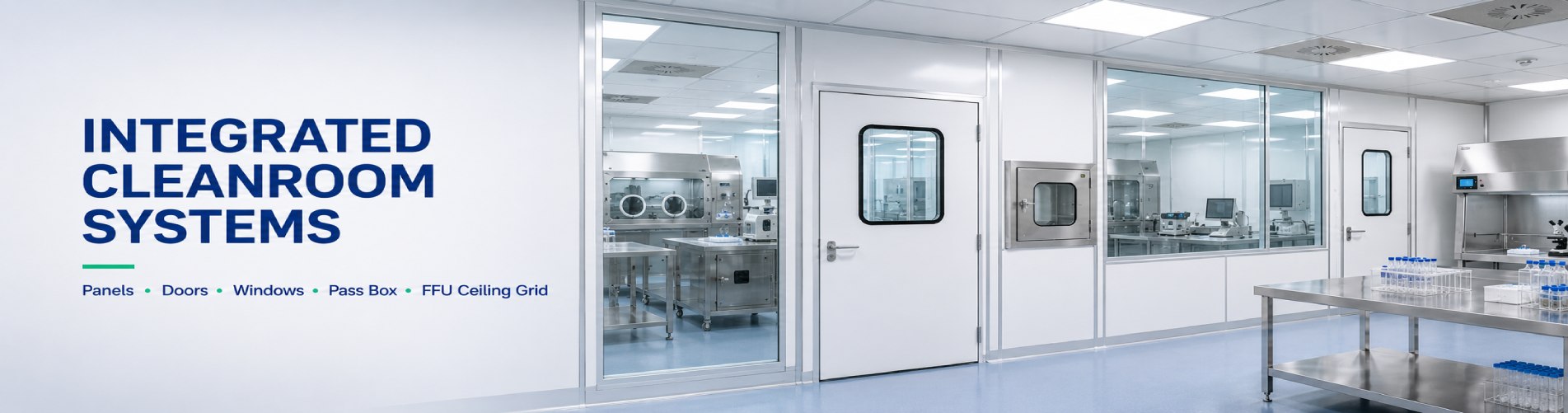
Semiconductor process bays do not stay frozen forever. Tool changes, metrology expansion and yield-improvement projects can all require new clean zones. Demountable cleanroom wall systems help teams reconfigure space without treating every renovation as a full envelope rebuild.
cleanroom wall systems cleanroom panels cleanroom doors modular cleanroom
A demountable wall is not simply a temporary partition. In a semiconductor cleanroom, it must behave like part of the pressure boundary while still allowing future removal, panel replacement or layout adjustment. That balance is why wall system detailing matters more than panel thickness alone.
Renovation Logic
Before selecting clean room modular wall systems, the engineering team should document the existing pressure cascade, return air route, supply airflow, door behavior and process utility paths. Moving a wall can change more than the floor plan. It can shift leakage paths, reduce return air capacity, block maintenance access or move a door into an unfavorable pressure relationship.
Demountable walls are useful because they allow a process bay to be divided, expanded or adjusted with less civil work. The design still needs fixed rules: where panels can be removed, how joints are resealed, how corners are protected, and how utilities are handled when the wall line changes.
ISO 14644-4 applies to new, modified and refurbished cleanroom installations. That makes it directly relevant when a semiconductor fab changes existing cleanroom wall layouts.
Wall System Details
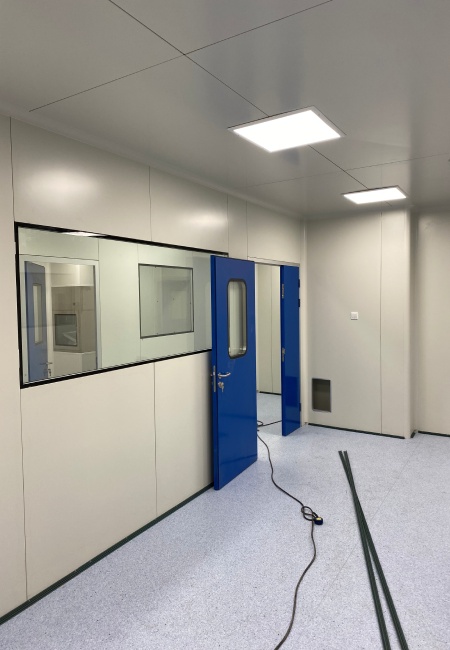
The joints in modular clean room wall panels should remain cleanable, flush and inspectable after relocation. Gaskets, sealants, splines, coving, door frames, window frames and service penetrations must be selected as a system. If one component is easy to remove but another requires destructive cutting, the wall system is not truly demountable in practice.
| Design point | Why it matters | Recommended record |
|---|---|---|
| Panel joint | Controls leakage, cleaning and future removal. | Joint detail, seal type and inspection photos. |
| Door interface | Affects personnel flow and pressure recovery. | Door swing, gasket check and interlock logic where used. |
| Service penetration | Can become a particle trap or leak point. | Penetration schedule and resealing procedure. |
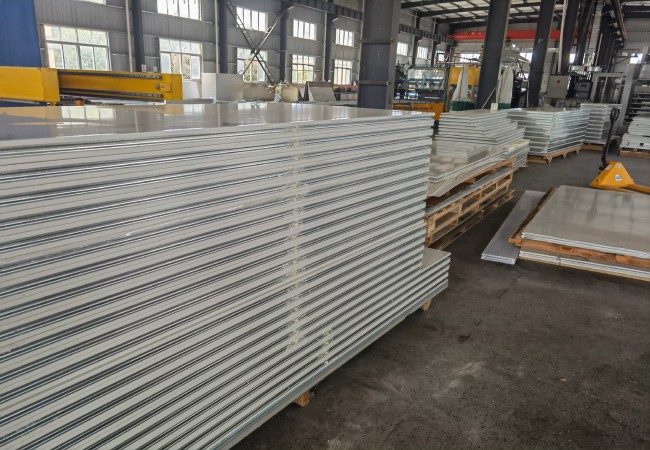
| Panel storage | Reusable panels can be damaged during staging. | Protection method and panel identification list. |
Low-Disruption Work
For fabs that cannot shut down large areas, the reconfiguration sequence matters as much as the final drawing. Temporary barriers, protected material routes, off-shift work windows, negative or positive pressure hold points and cleaning stages should be written into the method statement before panels are moved.
Wonclean modular cleanroom walls can support phased installation because panels, doors and windows can be organized into repeatable modules. The critical step is to label each panel, protect clean surfaces during staging and verify that reinstalled panels are not treated as new work without inspection.
ISO 14644-3 is relevant after reconfiguration because the modified cleanroom still needs performance testing for pressure, airflow and cleanliness-related attributes defined by the project.
Qualification View
When modular cleanroom walls are moved, the qualification plan should be reviewed. Pressure difference, airflow balance, particle classification, recovery expectation and alarm response may all change. The cleanroom may still look the same, but the room boundary has changed.
ISO 14644-1 remains the reference for airborne particle cleanliness classification. After reconfiguration, the project team should define whether full classification, partial retesting or targeted verification is required by the change impact assessment.
Technical Fact Check
Referenced Technical Standards
FAQ
It is a modular wall system designed to provide cleanroom-grade surfaces and joints while allowing future removal, replacement or reconfiguration with controlled work methods.
They are useful when process bays may change, tools may be replaced, or renovation must be phased with lower disruption to adjacent production areas.
Usually a change impact assessment is needed. Pressure, airflow and particle testing may be required depending on the size and risk of the modification.
Panel labeling, protected staging, accessible joints, replaceable gaskets, documented penetrations and non-destructive door or window interfaces all improve reuse.

 Room JT30151, Building 4, Area B, No. 925 Yecheng Road, Industrial Zone, Shanghai,China
 Info@wonclean.com
Allen@wonclean.com
Joy@wonclean.com
Info@wonclean.com
Allen@wonclean.com
Joy@wonclean.com
 +86 13671979988(Allen)+86 15950938878(Joy)


 layanan daring

